Tongue Tie Release & Aftercare: What to Expect After Your Baby’s Frenotomy

Your baby has had their tongue tie released — what happens now?
If you've made the decision to have your baby's tongue tie released, you may be feeling a mixture of relief, hope, exhaustion and perhaps even a little uncertainty about what happens next.
You may have spent weeks navigating feeding difficulties, nipple pain, clicking, shallow attachment, long or frequent feeds, unsettled feeding, slow weight gain or concerns about your baby's milk transfer.
And now the frenotomy has been done.
So… what should you expect now?
One of the most important things I want parents to know is that a tongue tie release is not necessarily an instant fix.
The procedure releases the restrictive tissue and gives your baby's tongue greater potential for movement. But your baby has been feeding with their previous tongue movement patterns since birth. Learning to use that new range of movement can take time, practice and — very often — feeding support.
The release may be an important part of the journey, but the feeding relationship still needs support after the procedure.
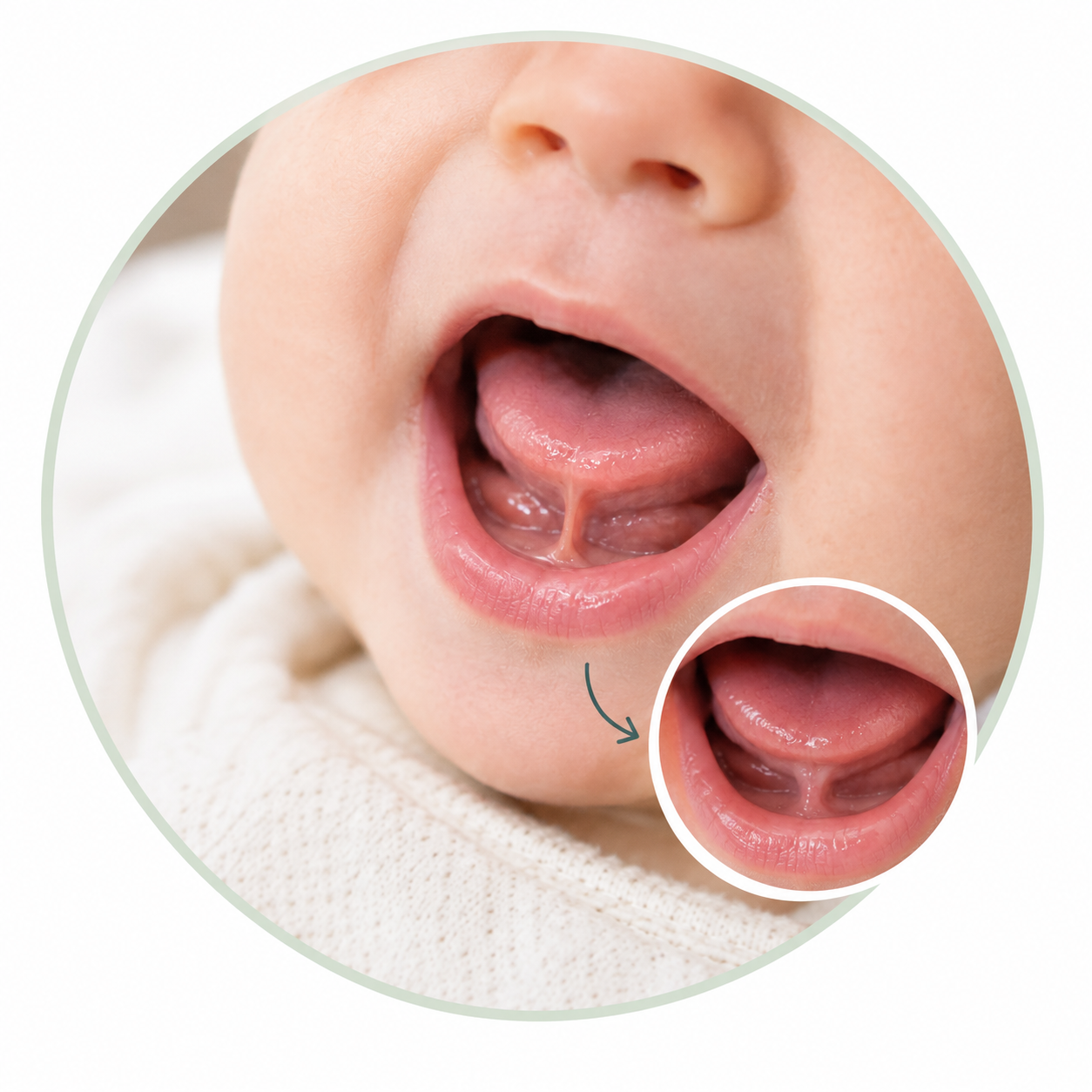
What is a frenotomy?
A frenotomy is a procedure used to release a restrictive lingual frenulum — commonly referred to as a tongue tie.
A restrictive frenulum can limit the tongue's ability to extend, elevate and move effectively. In some babies, this can contribute to breastfeeding difficulties such as a shallow or painful latch, difficulty maintaining suction or ineffective milk transfer.
Importantly, not every baby with a visible tongue frenulum needs treatment.
Current guidance emphasises that tongue tie should be considered in the context of function and feeding, rather than appearance alone. A comprehensive feeding assessment is an important part of deciding whether a release may be appropriate.
When a frenotomy is recommended, it is generally a quick procedure performed by an appropriately trained medical or dental practitioner.
What happens immediately after a tongue tie release?
Every baby responds differently.
Some babies may latch and feed immediately after their procedure. Others may be unsettled, sleepy or simply need some time to recover from the experience.
You may notice:
- Crying or fussiness immediately after the procedure
- A period of needing extra cuddles and settling
- A change in the way your baby attaches to the breast
- A different sucking pattern
- Temporary feeding changes
- A small amount of bleeding immediately following the procedure
- Your baby appearing tired after the procedure
Your baby's treating practitioner should provide you with specific instructions about feeding immediately after the procedure, pain relief if required, wound care and when they would like to review your baby.
The wound may look different as it heals
One of the things that can alarm parents is looking underneath their baby's tongue after a release.
The healing area can develop a white, cream or yellowish appearance.
This can look concerning if you don't know what to expect.
A healing wound in the mouth does not necessarily look like a healing wound on the skin. The appearance of the wound can change as it heals, and the treating practitioner should explain what they expect the wound to look like and what would be concerning.
If you are unsure whether what you are seeing is normal healing, contact the practitioner who performed the procedure rather than trying to diagnose the wound yourself.

Does my baby need stretches after tongue tie release?
This is an area where parents can receive very different advice.
Some practitioners recommend specific postoperative oral movements or wound care, while others do not recommend manipulating the wound.
There is currently no universal evidence-based postoperative stretching protocol for newborns following frenotomy. The 2024 American Academy of Pediatrics clinical report specifically advises against routine postoperative stretching exercises intended to prevent reattachment.
For this reason, I don't recommend families follow a generic tongue-tie stretching schedule they have found online.
Follow the postoperative instructions provided by the clinician who performed your baby's procedure.
If you have been asked to perform an exercise or wound-care technique and you are unsure how to do it, ask the treating practitioner to demonstrate it again.
If you have been given conflicting advice, it is reasonable to ask your baby's treating practitioner and your lactation professional to communicate with one another so that everyone is working from the same plan.
The most important part: supporting feeding after the release
This is where ongoing lactation support can be incredibly valuable.
A frenotomy changes the physical restriction.
It doesn't automatically teach your baby what to do with their newly available tongue movement.
Think about it this way:
Your baby may have spent weeks feeding with a tongue that could not move freely.
They may have developed compensatory patterns involving their jaw, lips, cheeks and tongue.
After the release, their anatomy has changed — but their motor pattern doesn't necessarily change overnight.
Your baby may need time and practice to discover how to use their tongue differently.
This is one reason I encourage families to have feeding support both before and after a tongue tie release.
What might change after the release?
Every baby is different, and improvements aren't guaranteed.
Some families notice changes very quickly.
Others notice gradual improvements over days or weeks.
You may notice:
A deeper latch
Your baby may be able to take more breast tissue into their mouth and maintain a more comfortable attachment.
Less nipple pain
If the tongue restriction was contributing to a shallow or ineffective latch, improving tongue movement may help reduce nipple compression and pain.
Changes in sucking
You may notice a different rhythm, stronger suction or less clicking.
More efficient feeds
Some babies may begin transferring milk more effectively and spend less time at the breast.
Less frustration
If feeding has been hard work for your baby, improved oral function may make feeding more comfortable and efficient.
Changes in milk supply
If your baby's milk transfer improves, this can sometimes affect breast stimulation and therefore milk production.
However, milk supply is influenced by many factors, so changes in supply should be assessed individually.

What if feeding seems worse after the release?
This can be frightening for parents.
You've gone through the assessment, the procedure and all the anticipation of things improving — and then suddenly feeding seems different.
Remember that different doesn't necessarily mean worse, and worse doesn't necessarily mean something has gone wrong.
Your baby may be adjusting to a new way of moving their tongue.
They may also be experiencing some temporary oral discomfort.
However, ongoing feeding deterioration should not simply be dismissed as "normal adjustment."
If your baby is struggling to feed, refusing feeds, becoming increasingly unsettled at the breast, transferring less milk or you are concerned about their hydration or weight, seek assessment.
This is where a follow-up feeding assessment can be particularly helpful.
Why follow-up with an IBCLC can be so valuable
The tongue tie release addresses the physical restriction.
An IBCLC can help you work on what happens next.
A follow-up consultation may include assessment of:
- Your baby's latch
- Positioning and attachment
- Tongue movement and oral function
- Sucking patterns
- Milk transfer
- Feeding duration and frequency
- Your baby's weight and growth
- Your breast and nipple comfort
- Your milk supply
- Breastfeeding patterns before and after the release
- Whether your current feeding plan is still appropriate
Sometimes the biggest change isn't immediately obvious.
Your baby may need help learning how to use their tongue differently, and you may need help adjusting your positioning or attachment to accommodate those changes.
Why follow-up with an IBCLC can be so valuable
The tongue tie release addresses the physical restriction.
An IBCLC can help you work on what happens next.
A follow-up consultation may include assessment of:
- Your baby's latch
- Positioning and attachment
- Tongue movement and oral function
- Sucking patterns
- Milk transfer
- Feeding duration and frequency
- Your baby's weight and growth
- Your breast and nipple comfort
- Your milk supply
- Breastfeeding patterns before and after the release
- Whether your current feeding plan is still appropriate
Sometimes the biggest change isn't immediately obvious.
Your baby may need help learning how to use their tongue differently, and you may need help adjusting your positioning or attachment to accommodate those changes.
What can I do at home?
The most important thing is to follow the individual plan provided by your baby's treating practitioner and your lactation professional.
In general, you can support your baby by:
01. Offering frequent opportunities to feed
Continue to feed your baby according to their individual feeding cues and your feeding plan.
02. Focusing on comfortable attachment
If your baby is struggling with their latch after the release, don't assume you simply need to "wait for it to improve." Get help.
03. Protecting your milk supply
If milk transfer has been poor, your lactation professional may recommend expressing or another temporary feeding strategy while your baby develops more effective feeding skills.
04. Keeping follow-up appointments
A post-release feeding assessment can help identify changes that may otherwise be difficult to recognise.
05. Giving your baby time
Learning a new oral movement pattern is a process. Your baby may need time, patience and support as they develop new feeding skills.
When should I seek help?
Most babies recover without significant complications, but parents should know what to look out for.
- Bleeding that is persistent or does not settle
- Your baby refusing feeds
- A significant deterioration in feeding
- Your baby becoming unusually lethargic or difficult to rouse
- Signs of dehydration, including significantly fewer wet nappies
- Fever or your baby appearing unwell
- Increasing swelling or concerning changes around the wound
- Poor weight gain or concerns about milk transfer
- Anything that doesn't feel right to you

What if the feeding problems don't disappear?
This is an important conversation too.
A tongue tie may be contributing to breastfeeding difficulties, but breastfeeding is complex.
There can be many reasons a baby struggles with feeding, including positioning and attachment, milk supply, oral-motor coordination, prematurity, birth-related factors, neurological or muscular factors, pain, reflux-like symptoms and other medical or anatomical considerations.
The American Academy of Pediatrics recommends a collaborative approach involving appropriate healthcare professionals and lactation support when managing infants with suspected symptomatic ankyloglossia.
If feeding difficulties continue after a release, it doesn't mean you have failed — and it doesn't automatically mean the procedure "didn't work."
It means your baby deserves another look at the whole feeding picture.
You don't have to navigate the aftercare alone
Having your baby's tongue tie released can feel like the end of a long journey.
But for many families, it is actually the beginning of a new stage.
There can be excitement when you notice your baby moving their tongue differently.
There can also be uncertainty when feeding doesn't immediately look the way you hoped it would.
You don't need to work it all out on your own.
As an IBCLC and Endorsed Midwife, I can support families with breastfeeding and feeding assessment following tongue tie release, including looking at latch, positioning, milk transfer, supply and your baby's ongoing feeding progress.
Sometimes you just need someone experienced to sit beside you, watch a feed and help you work out what your baby is telling you.
"This is something we can work through together."
A final word for parents
If your baby has recently had a tongue tie release, take a breath.
You have already done a lot.
The procedure is one part of the journey. Healing is another. Learning new feeding skills is another.
And you and your baby may need a little time to find your new rhythm.
There is no prize for doing the aftercare perfectly.
There is no perfect breastfeeding journey.
What matters is that your baby is safe, nourished, growing and supported — and that you are supported too.
Has your baby recently had a tongue tie release?
Wondering what comes next?
Book a follow-up breastfeeding
consultation with Jess to assess
feeding, latch, milk transfer and
your baby's progress.
Let's make sure you and your baby
have the support you need.